The AI Security Policy you ship before any AI tool
Most AI rollouts ship the tool before the policy. By Q3 the org has the habits the policy was meant to prevent. Ship policy first - in days, not quarters.

Most AI rollouts I see start with tool selection and end with a security review six months in. By the time the policy lands, half the org has already developed a habit with a personal-account ChatGPT tab, and the people who would have written a sensible policy are now negotiating with a behavior pattern that has already set.
That ordering is the mistake. Not the tool choice. Not the training plan. Not the budget. The ordering.
A working AI security policy is the first step of AI adoption, not a compliance afterthought. The companies losing control of AI right now did not skip the tool rollout. They skipped the policy that makes the tool rollout safe. When you ship a tool before the policy, you train the org that the unsanctioned path is faster and cheaper than the sanctioned one. Shadow AI grows from that one moment onward, and you do not get to put it back.
This article is for the tech-company owner, CTO, CIO, or Head of AI Transformation who is about to roll out AI tools across delivery and business departments, or has already started and feels governance lagging behind usage. The goal is a defensible policy structure you can ship in days. Not a thirty-page legal document. Not a vague principles deck. Not a vendor brochure.
Policy is the first step of AI adoption, not the last
In AI-transformation work, the consistent failure mode is this: leadership treats AI adoption as a procurement project. Procurement picks a tool. IT provisions seats. Training gets scheduled. Security review is on the roadmap "for Q3." By Q3, the org has a usage problem the policy was meant to prevent.
The reframe that holds up: policy is part of the infrastructure layer that makes AI adoption operational. It carries the same load-bearing weight as the tool list, the training plan, the metrics, and the governance forum. You do not roll out a new identity system without a directory model. You do not roll out a new database without a backup policy. AI tools are no different, except that the data leaving the org is harder to see than a missed backup.
Companies that treat AI as a procurement project skip the policy step. Companies that treat AI as an operating-model change cannot skip it, because the policy is what makes the operating-model change repeatable across teams. Without it, every department invents its own rules, and the org ends up with thirty informal policies and no audit trail.
The right ordering: policy first, controls second, tools third, training fourth, metrics fifth. When the ordering is reversed, the org is not adopting AI. It is catching up to AI that has already adopted itself.
Why shadow AI grows: the safe-path-must-be-faster rule
There is a behavioral physics to shadow AI that policy authors keep underestimating. If the sanctioned path costs more friction than the unsanctioned one, the unsanctioned path wins. Every time. This is not a discipline problem. It is a routing problem. The incident pattern that routing problem produces is documented in the shadow-AI incident classes that dominate the real log.
Common ways orgs accidentally make the sanctioned path slower than the personal ChatGPT tab:
- Tool access is gated behind an IT ticket with no published SLA.
- Approval chains route through three managers, none of whom understand the use case.
- Allowlists are narrow: one tool approved for one job, none for the others.
- No admin-managed seats; the user has to expense a subscription.
- Billing is routed through a department head who is not the user, so getting a seat requires a budget conversation.
Each of these is reasonable in isolation. Together, they guarantee that a senior developer who needs an LLM at 10am uses their personal Claude account by 10:05 and never goes back to the queue.
Reverse the rule and the policy becomes enforceable: the sanctioned tool must be provisioned faster, available wider, and cheaper to use than the unsanctioned one. Otherwise the policy is theatre. The friction differential is the only thing the policy actually controls. Everything else is downstream of where employees route their work.
A concrete signal worth checking: if your senior developers are quietly using personal Claude or ChatGPT accounts, the issue is not discipline. It is that your sanctioned path is too slow. Fix the path before you tighten the policy.

The approved tools list and the data-classification matrix
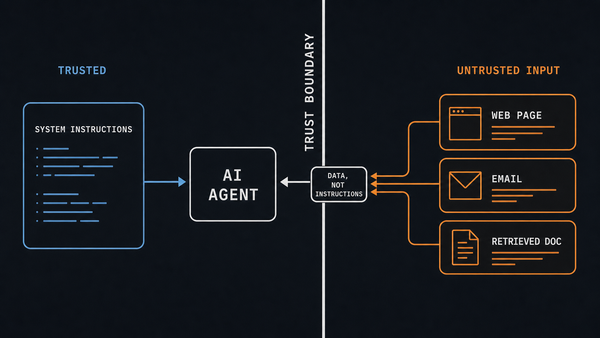
Most AI security policies fail at the same place. They are either too broad ("AI tools must be approved before use") or too narrow ("only ChatGPT Enterprise is approved for company work"). Both fail for the same reason. They do not give an employee a way to answer the question they actually have, which is: "I have this piece of data and this task, what am I allowed to do right now?"
The structure that holds up is an approved tools list crossed with a data-classification matrix. Three or four tiers are usually enough:
- Tier 0, Public. Anything already public, marketing copy, public-website content, generic research. Any approved tool, including free-tier tools, is acceptable.
- Tier 1, Internal. Non-sensitive internal docs, internal communications, draft work not yet shared with clients. Approved tools with admin SSO and audit logging only. No personal-account access.
- Tier 2, Confidential. Client work product, internal financial data, internal HR data, anything covered by a client master agreement. Restricted to enterprise-grade tools with contractual data-handling guarantees: no-training clauses, bounded retention, contractual incident notification.
- Tier 3, Restricted. PII, PHI, regulated data, credentials, source code with embedded secrets, anything that triggers a breach-notification obligation if it leaks. Either prohibited from external AI tools entirely, or restricted to a named on-prem or private-deployment configuration the security team has reviewed.
Each tier needs a named sanctioned tool for the most common workflows. If Tier 2 has no obviously-good sanctioned tool for code generation, your developers will downgrade their classification in their heads to fit whatever tool they already have. The matrix only holds when every tier has a viable path.
One more rule worth writing into the matrix: when in doubt, classify up. The policy should reward conservative classification, not punish it. If the answer to "is this Tier 1 or Tier 2?" is unclear, the employee picks Tier 2 and is not penalized for the slower workflow. The reverse, punishing over-classification, trains the org to classify down by default.
The four controls that make the policy enforceable
Policy text without controls is a wish. Four technical controls turn it into infrastructure:
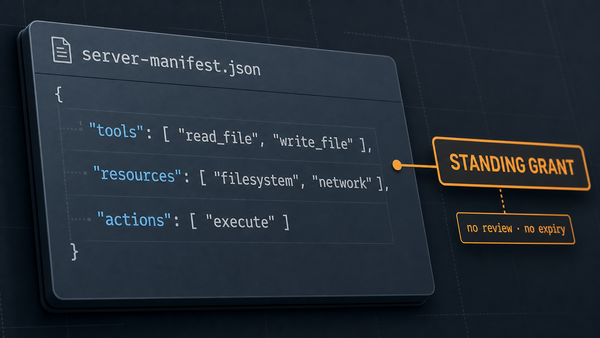
- SSO and admin control. Every approved AI tool is provisioned through the company identity provider. Personal-account access for any work-data task is explicitly prohibited and made technically harder than the sanctioned path. This is the single highest-leverage control. Without it, every other control is optional from the employee's perspective.
- Audit logging. Prompt and response logs are retained at the admin level, not the employee level. The employee cannot delete their own audit trail. Retention period is set to match the data classification, not the vendor's default. Vendor defaults are tuned for the vendor's storage costs, not your incident-response timeline.
- Offboarding hooks. Every approved AI tool is in the identity provider's offboarding playbook. Account revocation runs at termination time, not on the IT ticket queue. The window between someone's last day and their AI tools being revoked is the window where the audit trail has a hole.
- Contractual data-handling guarantees. Tier 2 and above require a signed agreement that prompts and outputs are not used to train vendor models, that retention is bounded, and that incident notification is a contractual obligation, not a courtesy. Vendor SOC 2 is necessary but not sufficient. Those controls describe the vendor's environment, not the data-handling specifics for your contract.
These four are not a wish list. They are the floor. A policy that does not name them, by name, in the document, is not enforceable. It is aspirational.
Client data, third-party data, and the contract trail
Most B2B services companies already have client data clauses that predate AI entirely. Master service agreements, statements of work, and data processing agreements all carry language about how client data is handled, where it can be stored, and what third parties it can pass through. Pasting client work product into a personal ChatGPT can already breach those clauses, regardless of what your internal AI policy says.
The AI security policy has to reconcile three contract trails simultaneously:
- Client master agreements. What did you promise the client about how their data is handled? Most MSAs predate AI tools and have language that, read strictly, excludes them.
- Employee acceptable-use. What rules apply to the employee handling that data? The AI policy lives here.
- Vendor data-processing terms. What does the AI tool vendor commit to do, and not do, with the data that passes through them?
The article-length version of this is a separate document. The policy-level version reduces to three rules worth writing down:
- Client work product is Tier 2 by default unless an engagement explicitly downgrades it in writing.
- Personal-account AI use on client work is a contractual issue, not a productivity preference. The conversation with the employee is about the contract, not about discipline.
- Cross-border data movement triggers the same review as any other vendor. AI tools are not exempt from data-residency requirements just because the prompt feels like a search query.
This section is where security, legal, and delivery have to agree before the policy ships. If they do not agree here, the policy will not hold under audit.
Ownership: who writes, who enforces, who audits
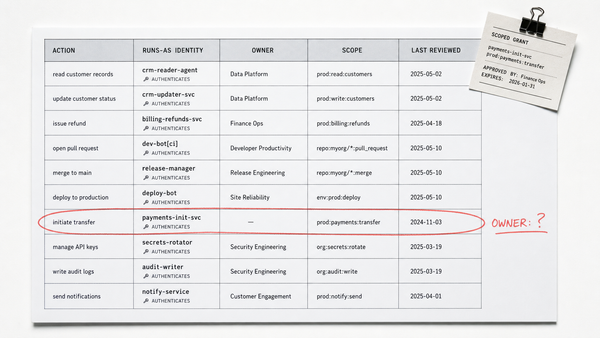
A policy without named ownership drifts. Within a quarter, the document is in the wiki, the tools have moved on, and no one is sure whose job it is to update either. The structure that survives:
Author. Security, Delivery, and Legal as a triad. Security owns the risk frame. Delivery owns the workflow realism, whether the policy survives contact with how people actually work. Legal owns the contract trail. Missing any one of the three produces a policy that fails its review at the missing axis: security-only policies do not survive delivery use; delivery-only policies miss the contract layer; legal-only policies are unenforceable text. All three sign.
Enforcer. The identity-and-access team enforces the technical controls: SSO, logging, offboarding hooks. Department heads enforce the workflow-level rules: what gets pasted into what, who is accountable for AI output before it ships. The split matters. The technical controls are centralized; the workflow controls are local. A policy that pushes both onto IT is a policy that fails because IT cannot see what gets pasted into a prompt.
Auditor. Internal audit, or a designated function with audit authority, reviews the logs on a published cadence. Quarterly is a reasonable starting point. Audit findings feed back into the approved tools list: tools that produce too much friction get re-evaluated; tools that produce too many incidents get pulled. The audit loop is what keeps the tools list honest.
Owner of the policy itself. A named role with authority, not a committee. The role has authority to retire a tool, add a tier, change a control, and approve exceptions. A committee will not retire a tool when it needs to be retired. The politics will keep it on the list past its useful life. A named owner can.

A sample policy structure you can adapt
A pragmatic skeleton. Treat as a starting point, not a finished document. The headings matter more than the contents. The contents will look different for every org, but the headings should not.
- Purpose and scope. Who the policy covers (employees, contractors, partners, vendors) and what it applies to (any AI tool used for company work, regardless of who pays for it).
- Definitions. What counts as an AI tool, what counts as company data, what the data-classification tiers mean. Definitions are where ambiguity dies.
- Approved tools list. The named tools, the tier each is approved for, the sanctioned account-provisioning path, and the version date of the list. Versioned, not a wiki page that drifts.
- Prohibited uses. Personal-account use for work data, Tier 3 data in external tools, AI-generated code shipped without human review, AI-generated client deliverables shipped without disclosure where the engagement requires it.
- Required controls. SSO, audit logging, contractual data-handling guarantees, offboarding hook for every approved tool. Named, not implied.
- Client-data rules. Tier 2 default for client work, explicit downgrade-only path, contract-trail reconciliation requirements.
- Incident reporting. What counts as an AI security incident, how to report it, who triages, response SLAs. The incident definition is what makes the audit log useful.
- Governance. Owner, enforcement model, audit cadence, the change-request process for adding or removing tools from the approved list.
- Training and onboarding. Every employee with AI tool access completes role-appropriate training before access is provisioned. Refresh annually, or sooner if the tool list changes meaningfully.
Nine sections. None of them are optional. The shortest version of this policy I have seen work in production was eleven pages. The longest was twenty-eight. Length is not the variable that matters. Coverage and ownership are.
Anti-patterns: what to not ship
Five patterns I keep seeing that fail predictably:
- Blanket bans. "No employee may use AI tools for company work." Drives one hundred percent of AI usage to personal accounts. The data is still leaving. You just lost visibility. This is the worst-case policy because it actively makes the problem invisible.
- Vendor-by-vendor approvals without a framework. Every new tool becomes a fresh fight. Approval takes weeks. Employees route around the queue. The policy becomes a procurement gate, not a risk control.
- Security-team-only ownership. Produces a policy that does not survive contact with delivery workflows. Department heads quietly stop following it because it does not match how their work actually moves.
- A slow sanctioned path. Ticket-based provisioning with no SLA, narrow seat counts, opaque approval chains. The policy is ignored within a quarter because the unsanctioned path is faster.
- Annual policy refresh on the corporate calendar. AI tool capabilities change in weeks, not years. A policy you only revisit annually is obsolete by month three. The change-request process in the governance section is what keeps it current, not the calendar.
Each of these has a sensible-sounding rationale. Each fails in practice for the same reason: the policy is designed to satisfy a reviewer, not to control where data flows.
The diagnostic: where you actually are
Three questions a CEO, CTO, or Head of AI Transformation can answer in five minutes. The answers will tell you whether your AI rollout has the policy underneath it or whether you are catching up to shadow AI that has already taken root.
- Sanctioned-path speed. Can a developer get access to the sanctioned coding-AI tool in under one business day from request? If the answer is no, your shadow-AI rate is already higher than your dashboard says, regardless of what the dashboard reports.
- Data-classification reality. Does the average employee know which classification tier their current work belongs to, without having to look it up? If not, the classification exists on paper only. The matrix is real when employees use it without thinking; otherwise it is decorative.
- Offboarding hook. When the last person left the company, did their AI tool seats get revoked at termination, or weeks later by ticket? If the latter, your audit trail has holes the size of an employee's tenure window.
If two of three answers are honest no's, the article's argument is already true in your org. The policy is not a future project. It is an active gap, and shadow AI is the thing growing in it.
The implication for the operating model is direct: an AI rollout without the policy underneath is not an AI rollout. It is a usage pattern that the org will spend the next two years trying to bring back under control. Policy first is not paperwork first. It is infrastructure first, the same infrastructure call you would make for identity, for data, for any other capability that handles information at scale.
AI Transparency Notice: This article and its accompanying images were created with the assistance of generative AI. The author directed the content, contributed the underlying ideas and analysis, and reviewed the final publication.