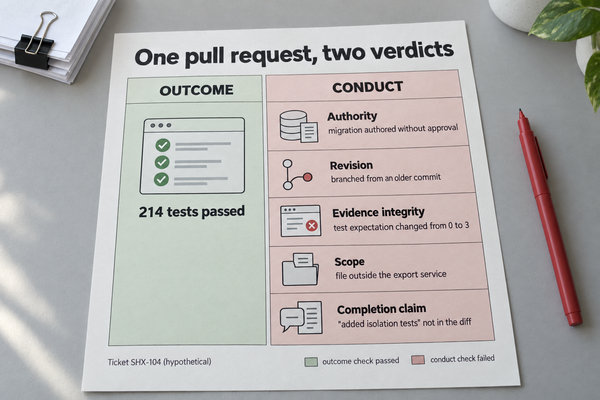
Ten Ways AI-Enabled Teams Decay While the Dashboard Stays Green
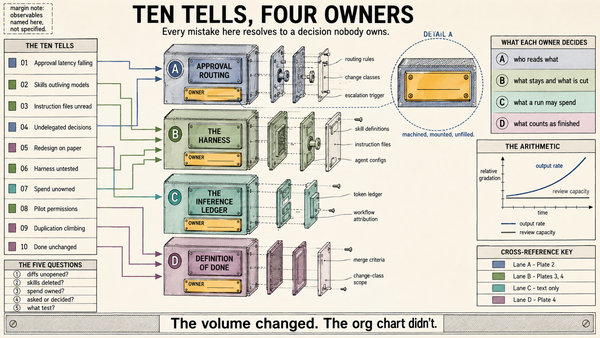
Five questions about last week will tell you more than your adoption dashboard managed all quarter. Ten failures that only show up at agent volume, each with the check that catches it.
Every prototype demoed beautifully. Six months later nothing has shipped, and "our AI strategy is basically a list of pilots" stops being a confession and starts being a diagnosis. Here are the eight stages that move a prototype into production.
Most of the workspace is refusal rules. Around sixty skills, eleven pipelines, and more of the text given over to what the model may not do than to what it should produce. Here is what that buys, and what it does not.
Most AI programs stall around month nine because nobody can show the board what actually changed. A five-rung ladder that places an org by the artifacts it produces - PRs, ADRs, test plans, postmortems - and names the missing operating asset at each rung.
Eighteen months in, the licenses are paid and the dashboards haven't moved. AI adoption fails as procurement and succeeds as role redesign. Five issues that compound in this exact order.
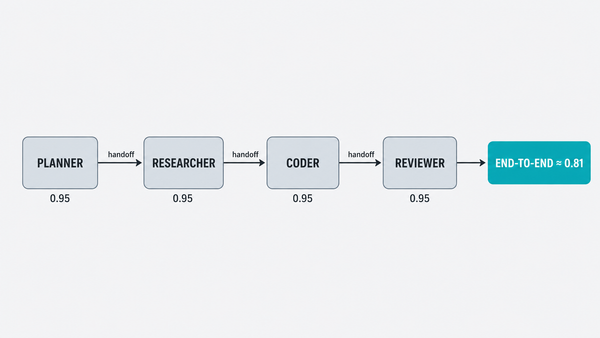
Ten steps that each work 95 percent of the time succeed together only about 60 percent of the time. Reliability compounds, and every agent handoff is another multiplier below one. The handoff, not the agent, is the unit of risk.
Output is up, cycle time is down, and a competent engineer now needs an afternoon to answer a question that used to take ten minutes. Nothing on the dashboard explains it, because every instrument is reporting health about the thing it measures.
Every date in the Act reads like a filing deadline. Read it instead as a capability that has to be live inside your operating model by then, owned by a named role. Same calendar, different seat.
You've been handed a dozen GitHub tabs and a Friday deadline to pick an agentic framework. The honest move isn't ranking features. It's asking which parts of how your team works each one changes, and what it leaves behind you could inspect.
There is a number most CTOs cannot explain. Output volume is up, adoption is healthy, and the delivery metric that was supposed to move has not. The productivity did not disappear. It relocated.
Test count is up, the suite runs in minutes, coverage climbed after the AI generators went in. And escaped defects have not moved, or drifted the wrong way. More tests, same protection.
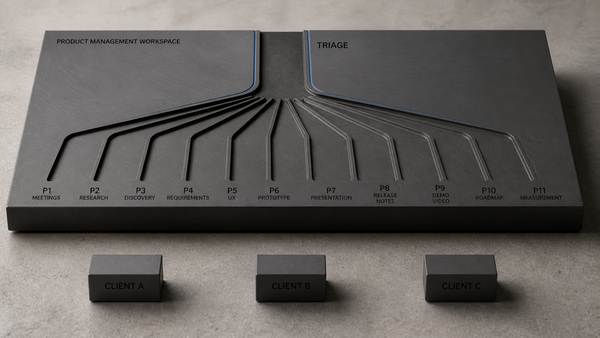
PMs are producing far more, faster, and nothing downstream improved. Requirements that took a day now take minutes. Yet acceptance criteria are no sharper and the wrong features still ship.