Ten Ways AI-Enabled Teams Decay While the Dashboard Stays Green
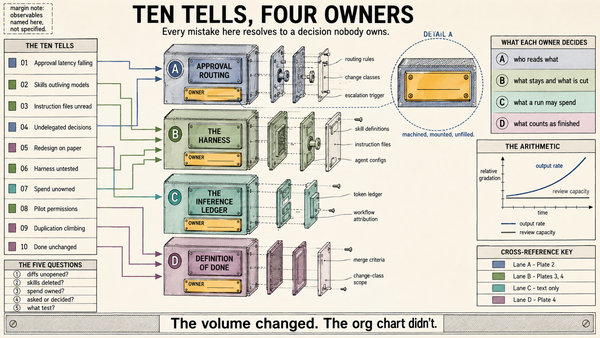
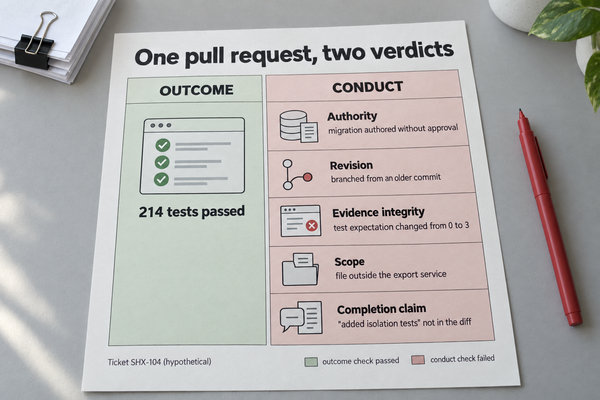
Five questions about last week will tell you more than your adoption dashboard managed all quarter. Ten failures that only show up at agent volume, each with the check that catches it.
Every prototype demoed beautifully. Six months later nothing has shipped, and "our AI strategy is basically a list of pilots" stops being a confession and starts being a diagnosis. Here are the eight stages that move a prototype into production.
Most of the workspace is refusal rules. Around sixty skills, eleven pipelines, and more of the text given over to what the model may not do than to what it should produce. Here is what that buys, and what it does not.
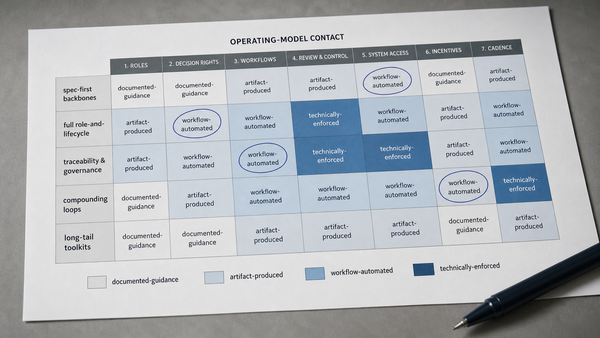
Most AI programs stall around month nine because nobody can show the board what actually changed. A five-rung ladder that places an org by the artifacts it produces - PRs, ADRs, test plans, postmortems - and names the missing operating asset at each rung.
Eighteen months in, the licenses are paid and the dashboards haven't moved. AI adoption fails as procurement and succeeds as role redesign. Five issues that compound in this exact order.
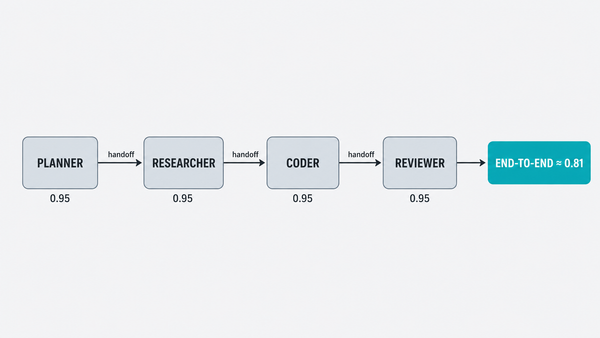
Ten steps that each work 95 percent of the time succeed together only about 60 percent of the time. Reliability compounds, and every agent handoff is another multiplier below one. The handoff, not the agent, is the unit of risk.
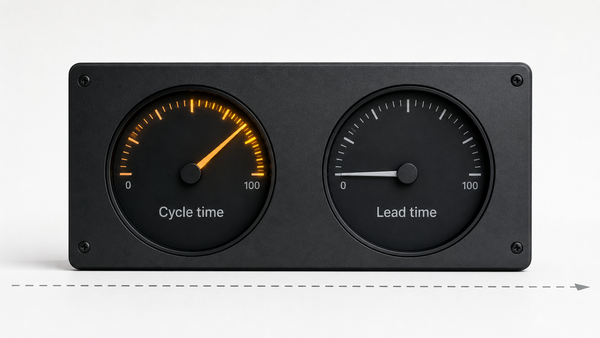
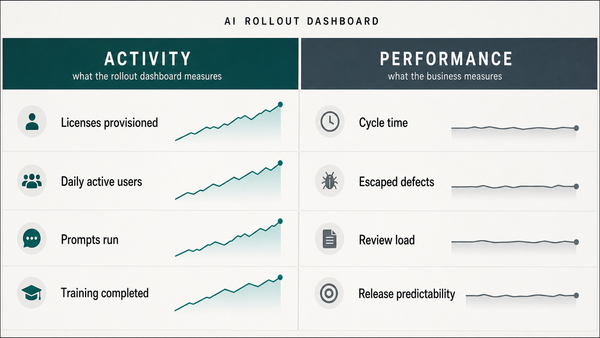
Output is up, cycle time is down, and a competent engineer now needs an afternoon to answer a question that used to take ten minutes. Nothing on the dashboard explains it, because every instrument is reporting health about the thing it measures.
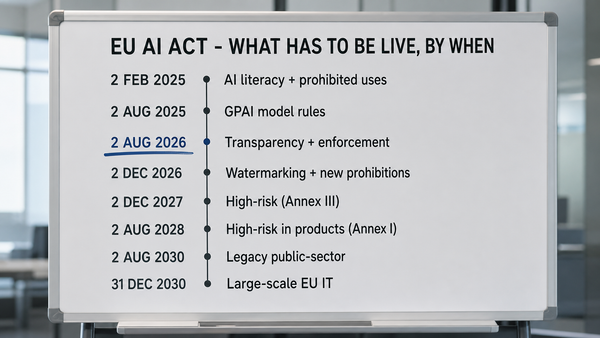
Every date in the Act reads like a filing deadline. Read it instead as a capability that has to be live inside your operating model by then, owned by a named role. Same calendar, different seat.
You've been handed a dozen GitHub tabs and a Friday deadline to pick an agentic framework. The honest move isn't ranking features. It's asking which parts of how your team works each one changes, and what it leaves behind you could inspect.
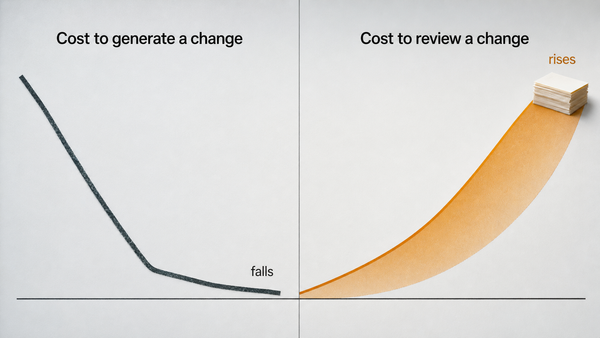
There is a number most CTOs cannot explain. Output volume is up, adoption is healthy, and the delivery metric that was supposed to move has not. The productivity did not disappear. It relocated.
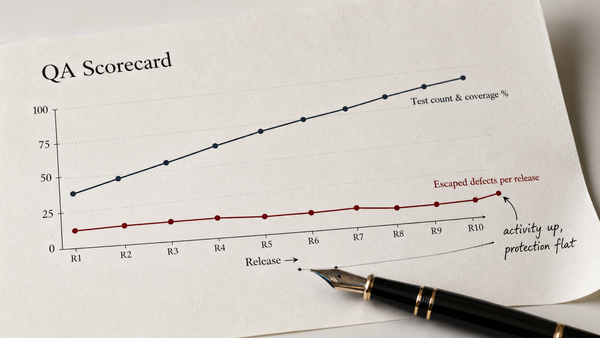
Test count is up, the suite runs in minutes, coverage climbed after the AI generators went in. And escaped defects have not moved, or drifted the wrong way. More tests, same protection.
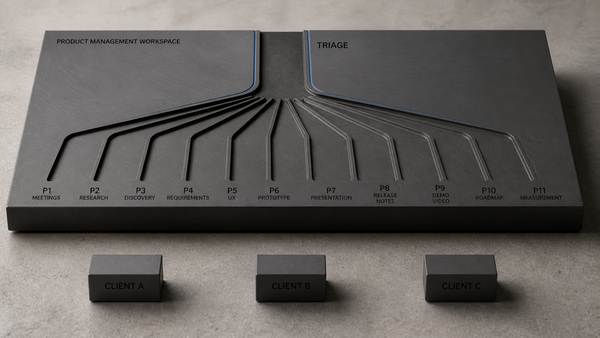
PMs are producing far more, faster, and nothing downstream improved. Requirements that took a day now take minutes. Yet acceptance criteria are no sharper and the wrong features still ship.
AI operating model
The strange part isn't that the win is small. It's that the win is missing. The coding got faster, and the time from request to customer stayed exactly the same.
Role Playbooks
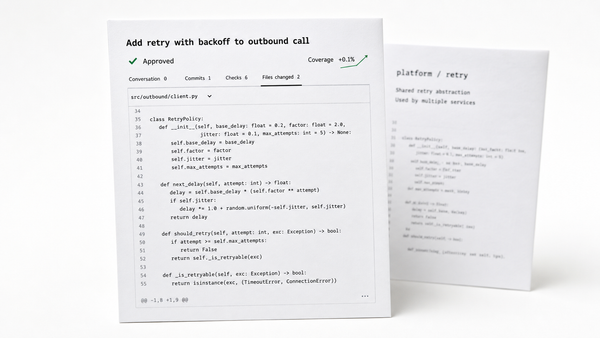
The diff is clean, tests pass, and the work lands in half the time. Then a reviewer asks why the bug happened, and the answer does not come. Not because the junior is careless.
AI operating model
Your Copilot dashboard says ninety percent. Then you look at cycle time and escaped defects, and both are flat. The gap between visible adoption and invisible delivery change is not the tool.
Quality Harness Engineering
The dashboards look like a win: PRs merged up, cycle time down, adoption climbing. Then the same leaders say delivery feels flat and quality feels thinner. That gap is the subject.
Quality Harness Engineering
Your engineers ship more code than ever, adoption is high, and delivery has barely moved. The instinct is to read that as an adoption problem. It is an accounting one.
AI operating model
An engineer will drop the phrase into a planning meeting and mean it as a personal workflow upgrade. Take the phrase seriously. The framing it arrives in is the part to reject.
AI operating model
An agent shipped clean code that quietly broke a convention living in a wiki page it never opened. The instruction file is where a team's standards reach the code, or quietly fail to.
AI operating model
Every AI coding session feels productive. Then the quarter ends, delivery is flat, and the board asks what the per-seat spend bought. Both facts are true at once, and the gap between them is the cost you keep re-buying.
AI Security
Agent security debates fixate on attacks reaching the agent. The question that comes first: what is the agent allowed to do, and through whose identity? That standing authority is owned by no one and revisited approximately never.
AI Strategy
Most AI products do not stall for lack of features. They stall because they ask users to build the machine before it does anything, then never check whether anyone comes back. The fix is an outcome-first shape: one valuable result, proven.
AI governance
You funded the AI rollout. Per-developer output climbed, the demos got faster, and then the delivery numbers refused to move. The slowdown most teams blame on governance is usually the wrong governance, or its absence. Here is the version of the argument that holds up.
AI Strategy
A passing eval suite feels like coverage. It is coverage of the world on the day you wrote it, and that world has already moved. What keeps the suite honest is a renewal loop, not a better set written once.